Practical executive guidance on cost reduction, vendor spend, workflow efficiency, tax opportunities, payment systems, recovery reviews, and margin improvement.
Insight Categories
Live Articles
Executive Access
Total Reading

In-depth perspectives on vendor spend, cost reduction, tax strategies, payment efficiency, and margin improvement.
Cost Reduction
A structured approach to prioritizing profit-improvement opportunities across recurring vendor spend, workflow friction, payment processes, tax opportunities, and recovery categories. Most businesses don't lack opportunity — they lack a systematic view of where it hides.
This framework examines how recurring costs accumulate, where vendor price drift occurs, what tax credits go unclaimed, and how payment friction erodes cash flow — and provides a structured path to identify quick wins and structural improvements.
Identifying R&D credits, hiring incentives, property tax reductions, and strategic deductions frequently left unclaimed.
How recurring vendor costs rise over time, what to review before renewal, and how independent benchmarking creates practical savings opportunities.
A practical look at payment timing, approval bottlenecks, processing fees, and vendor terms that affect operating efficiency.
A structured approach to prioritizing profit-improvement opportunities across recurring vendor spend, workflow friction, and recovery categories.
How recurring vendor costs accumulate, where pricing drift occurs, and systematic approaches to identifying savings opportunities.
Identifying where manual processes, approval bottlenecks, and workflow friction create unnecessary operational cost.
Identifying R&D credits, hiring incentives, property tax reductions, and strategic deductions frequently left unclaimed.
Payment timing, approval bottlenecks, processing fees, and vendor terms that affect operating efficiency and cash flow.
Systematic approaches to identifying class action claims, vendor credits, and overpayments that businesses frequently miss.
Strategic approaches to margin enhancement that preserve rather than constrain growth trajectories and market positioning.
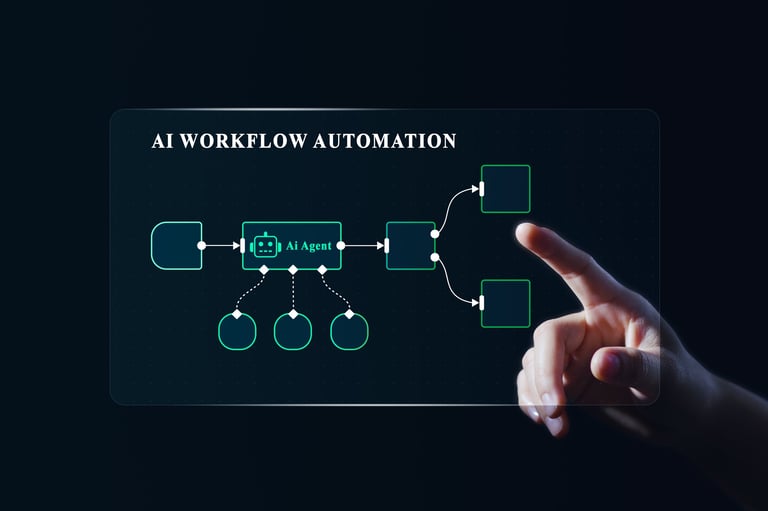
Practical applications of AI and workflow automation that reduce costs and improve throughput without disrupting core operations.
Practical executive guidance on cost reduction, vendor spend, workflow efficiency, tax opportunities, payment systems, recovery reviews, and margin improvement.
Identifying overlooked recovery categories including class action claims, unclaimed property, and vendor credits that businesses frequently miss.

Success-based property tax review strategies for owners paying over $50,000 annually in commercial assessments.

Identifying automation opportunities that reduce costs and improve throughput without disrupting core operations.


Understanding the Work Opportunity Tax Credit framework and systematic approaches to identifying qualifying hires.
How software, telecom, and carrier costs accumulate over time and how independent review can identify where pricing has drifted from current market.
Timing, positioning, and negotiation tactics for securing better terms on recurring vendor relationships.
How engineering studies reclassify building components to accelerate depreciation and create significant tax deferral.
Identifying where manual processes, approval bottlenecks, and workflow friction create unnecessary cost and how to address them systematically.
Reverse auction strategies and supplier management approaches for reducing energy expenses through pricing discipline.
Overlooked cost categories in manufacturing where independent analysis reveals significant savings opportunities.
Why cost reduction often delivers better ROI than revenue growth and how to prioritize.
Identifying overlooked tax credits including R&D credits, hiring incentives, and energy credits.
How vendor pricing drift happens and how to identify pricing gaps through competitive analysis.
Strategic approach to vendor contract renegotiation including timing, positioning, and tactics.
Specialized strategies for middle-market companies that lack enterprise-scale procurement resources.
Payment timing, approval bottlenecks, processing fees, and vendor terms that affect operating efficiency and cash flow.
Strategic approaches to margin enhancement that preserve rather than constrain growth trajectories and market positioning.
Practical applications of AI and workflow automation that reduce costs and improve throughput without disrupting core operations.
Identifying denial categories, root causes, front-end registration impact, and systematic approaches to reducing preventable denials in healthcare revenue cycle management.
Identifying charge-capture leakage through structured comparison of clinical activity, documentation, and submitted claims.
Understanding credentialing, enrollment, contracting, and privileging — and how delays create unreimbursed clinical activity.
Preventative health programs, payroll configuration, and benefit design strategies that operate alongside existing carrier relationships.
Identifying duty overpayment categories, understanding protests, exclusions, drawback, and the recovery mechanisms available to importers.
Understanding importer vs. broker responsibility, binding rulings, product classification, and how to approach a classification review.
Building a complete service inventory to identify unused circuits, abandoned cloud instances, and duplicate telecom services.
Identifying unused and underutilized SaaS licenses from former employees, shadow IT, and departmental duplicate purchases.
Evaluating coverage scope, utilization measurement, vendor diligence, and enrollment communication for legal and identity protection benefits.
How strategic working capital management — beyond basic AP/AR — unlocks cash trapped in your balance sheet and funds growth.
How to interpret margin comparisons, identify structural advantages and vulnerabilities, and build a margin improvement roadmap.
How established businesses can evaluate, prioritize, and implement AI use cases that reduce costs — avoiding hype and focusing on measurable outcomes.
How mid-market employers can evaluate self-funded plan design, stop-loss, pharmacy benefits, and claims data to identify savings.
How mid-market businesses can evaluate cybersecurity spend, insurance coverage, and vendor tools — ensuring protection is proportional to actual risk.
How uncashed checks, dormant accounts, vendor credits, and forgotten deposits escheat to states — and how a structured review recovers these funds.
How structured AP recovery audits surface duplicate payments, unapplied credits, pricing errors, and tax overcharges that accumulate silently over years.
How independent benchmarking against peer pricing reveals where vendor costs have drifted above market — and how to fix it.
How strategic vendor consolidation eliminates duplicate suppliers, unlocks volume leverage, and reduces administrative overhead.
A structured framework for evaluating and prioritizing automation opportunities — identifying which workflows deliver the greatest ROI.
A company can report a profit yet still feel short of cash. Diagnose where receivable timing, inventory, payment terms, and vendor leakage consume cash faster than earnings replenish it.
Finding unused licenses is only the start. Sustainable SaaS cost control requires finance and IT to establish ownership, visibility, and offboarding controls.
Cloud waste is often resources that outlive the projects and employees that created them. The financial fix begins with ownership and accountability.
When the same invoice is paid twice, the visible error is a payment — but the underlying failure can involve intake, vendor master data, approvals, or reconciliation.
Margin is rarely lost in one dramatic move — it erodes through incremental rate increases, new fees, and quantities that stop matching how the business operates.
The strongest AI business case isn't "automate everything." CFOs create more value by rejecting weak use cases early and concentrating investment where oversight and data support results.
Most renewal cost pressure is concentrated in the final weeks. A 120-day calendar gives CFOs and HR leaders time to benchmark, model, and negotiate without last-minute pressure.
The 90-day-and-over A/R bucket deserves special attention — not just for collectability but because it reveals upstream workflow problems that affect cash flow long before the write-off.
US importers have a finite window to pursue tariff recovery and classification corrections. Maintaining the right documentation before deadlines is what separates opportunity from missed recoveries.
Carrier agreements center on base discounts — but the real exposure lies in accessorial charges, dimensional-weight adjustments, and peak-season surcharges beyond the headline rate.
A structured approach to prioritizing profit-improvement opportunities across recurring vendor spend, workflow friction, and recovery categories.
How recurring vendor costs accumulate, where pricing drift occurs, and systematic approaches to identifying savings opportunities.
Identifying where manual processes, approval bottlenecks, and workflow friction create unnecessary operational cost.
Identifying R&D credits, hiring incentives, property tax reductions, and strategic deductions frequently left unclaimed.
Systematic approaches to identifying class action claims, vendor credits, and overpayments that businesses frequently miss.
The requirements, process, and expectations for professionals interested in the Blackspire channel partner model.
How merchant processing fees accumulate and where independent review can identify overcharges and optimization opportunities.
How AP process friction affects labor cost, late fees, and cash visibility — and where to find bottlenecks.
Identifying AR process breakdowns that delay collections, increase DSO, and create unnecessary working capital pressure.
A phased framework for identifying, prioritizing, and implementing margin improvement initiatives across cost categories.
A governance and ownership framework for SaaS and AI spend across finance, IT, procurement, and department leaders.
A decision framework for evaluating whether a higher renewal quote is justified before accepting, negotiating, or switching.
Usage correction, billing errors, credits, benchmarking, and renewal negotiation — and when switching still deserves consideration.
A cost map for the combined business — inventory, validate business need, and decide, without cancelling on apparent overlap alone.
Estimating whether a workflow justifies AI investment — without treating time saved as automatically cash saved.
A balanced comparison of where internal teams are strongest and where an independent specialist adds a different capability.
How employers can evaluate cost opportunities that keep the existing carrier and broker in place — and why compliance is decisive.
Consulting diagnoses and guides; outsourcing owns execution. A vendor-neutral comparison and a caution on recovery claims.
How a shipping cost audit reconciles invoices against contract and shipment data — and when a review may not justify the effort.
A disciplined sequence for reviewing non-labor cost leakage before headcount reduction becomes the default response to margin pressure.
A relationship-safe framework for recognizing cost-leakage signals in clients and introducing specialist reviews while protecting the advisor-client relationship.
Why total shipping spend can grow while shipment count stays flat — and the data leadership should review before renegotiating a carrier contract.
Audit processor markup, card mix, recurring charges, merchant accounts, contract terms, chargebacks, and effective processing costs.
Compare transaction costs, settlement timing, chargeback exposure, reconciliation workload, and working-capital impact across ACH, credit card, and wire payments.
Showing 12 of 61 articles
No articles are currently published in this category.
Structured guides to help leadership organize data, assess readiness, and prepare before engaging a cost-reduction review.
Prioritize automation opportunities by volume, cost, and business impact before investing in AI.
Reports, metrics, and records to gather before evaluating denial trends, aging AR, coding, and charge capture.
Prepare before SaaS, cloud, telecom, cybersecurity, and managed-service agreements renew.
Import records to assemble before evaluating potential tariff or duty overpayments.
Whether workforce, payroll, and benefit structure supports a meaningful savings review.
Organize contracts, invoices, and supplier data before a spend review with a prioritization matrix.
Carrier invoices, accessorial charges, and contract documents to organize before a shipping-cost review.
AP data, vendor records, and payment history to assemble when evaluating recovery opportunities.
Coverage scope, plan design, enrollment, and organizational fit for legal and identity protection benefits.
Blackspire evaluates the operating categories where pricing drift, unused services, missed recoveries, inefficient workflows, and unnecessary costs most often accumulate.
Supplier contracts • Shipping • Payment processing • Recurring services
Explore Cost ReductionSaaS • Cloud • Telecom • AI workflows • Contract renewals
Explore Technology SpendEmployer healthcare • Claims • Denials • A/R • Credentialing
Explore Healthcare SolutionsDuplicate payments • Missed credits • Tariffs • Incentives • Historical recoveries
Explore Recovery OpportunitiesNot sure where to start?
Blackspire can review your current cost structure confidentially and identify which areas warrant a deeper look.
Whether you're reviewing margin improvement, vendor spend, payment efficiency, tax opportunities, recovery categories, or workflow inefficiencies — the frameworks are tools. The application requires context.
Share your situation. We'll provide an honest assessment of your options and practical next steps — no obligation.
Questions before scheduling?