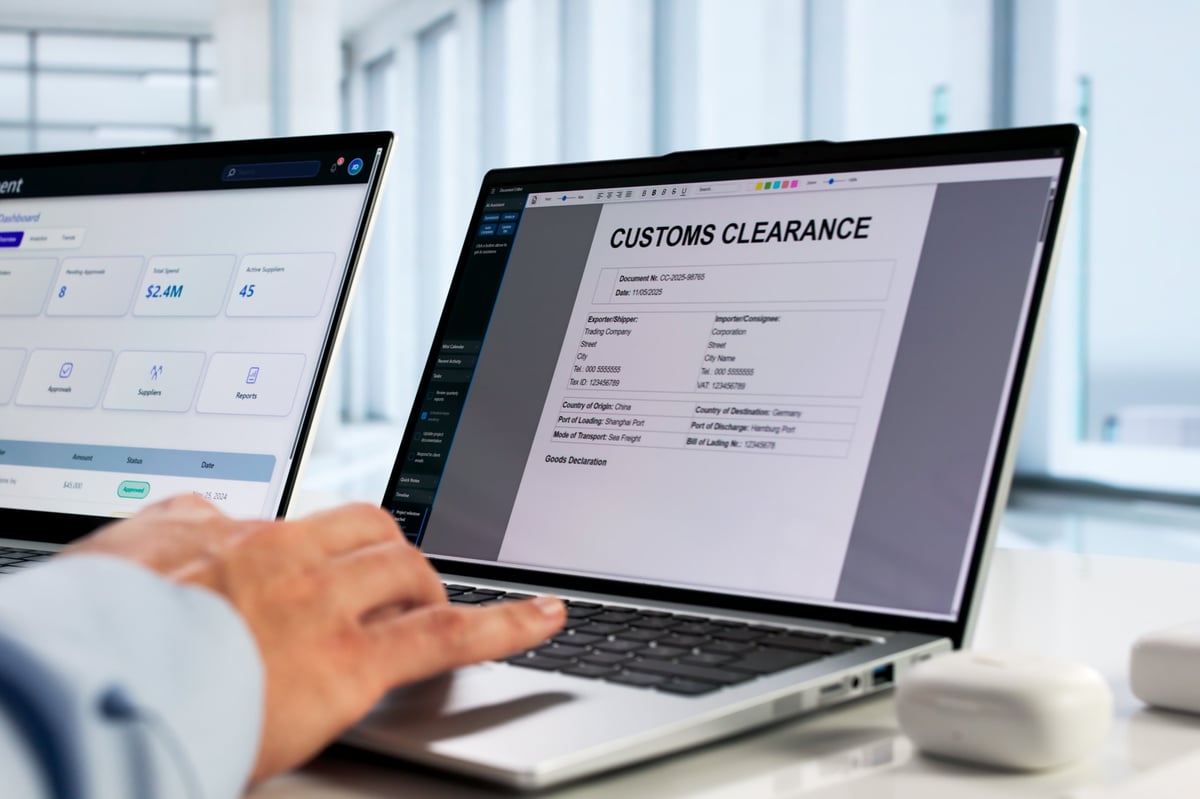
Tariff recovery, post-entry amendments and refund claims depend on documentation. US importers can legally pursue corrections to classification, valuation, preference claims and duty payments, but each remedy has a filing deadline. Once the deadline passes, the opportunity generally closes permanently. Finance and trade-compliance leaders should therefore treat tariff-recovery documentation as a time-sensitive asset, not an archival exercise. The right evidence, organized by entry and maintained before the filing deadline, is what separates a review that identifies recoverable amounts from one that confirms missed opportunities.
Key Takeaways
- Tariff recovery deadlines are driven by US Customs regulations — post-entry amendments, protests and other remedies each have their own statutory timelines.
- An import evidence file should include the entry summary, commercial invoice, classification basis, valuation support and any preference-claim documentation.
- Tariff recovery can arise from classification, valuation, preference programs, duty drawback, scope rulings and exclusion eligibility.
- An internal review process should separate "not yet reviewed" entries from those already assessed and classified by recovery potential.
Why Documentation Matters Before the Deadline, Not After
A tariff-recovery review determines whether duties were overpaid and whether a legal basis exists to recover them. The legal basis must be supported by evidence. If key documents are missing, incomplete or spread across systems, the review becomes an archaeological exercise. The business then faces a choice: spend time reconstructing documentation or accept that the recovery window may close. Leadership should therefore maintain import-evidence files that are ready for review, not assembled in response to a deadline.
What an Import Evidence File Should Contain
For each material entry, maintain: entry summary (CBP Form 7501 or electronic equivalent); commercial invoice; packing list; bill of lading or airway bill; proof of payment of duties; classification basis; valuation support; country-of-origin documentation; preference-program certificates where applicable; broker instructions and correspondence; product specifications or technical literature; any prior CBP rulings. This file should be organized so a reviewer can determine what was imported, how it was classified, what duties were paid and whether a reasonable basis exists to amend the entry.
Where Tariff Recovery Opportunities May Exist
Classification review: the HTS code drives the duty rate and may also affect exclusion or preference eligibility. Changes in product design, use or a more specific heading may support a lower rate. Valuation: if certain charges (such as international freight, insurance, buying commissions or assists) are treated inconsistently with CBP valuation rules, the declared value may be too high. Preference claims: the US maintains free-trade agreements and preference programs including USMCA, GSP and others. If goods qualify but preference was not claimed at entry, post-entry correction may be possible. Duty drawback: importers who subsequently export or destroy goods may be eligible for recovery of certain duties paid. Section 301 / trade remedy exclusions: exclusion requests may reduce or eliminate duties on specific products. And finally, scope rulings: if a product falls outside an antidumping or countervailing duty order, a scope ruling can confirm that the additional duties do not apply.
The Broker Relationship: Important but Not a Substitute for Internal Oversight
Brokers are critical partners, but responsibility for classification and duty accuracy ultimately rests with the importer. A recovery review may surface classification or valuation issues that the importer should independently evaluate, regardless of whether the broker's original determination appeared reasonable. Finance and compliance leaders should therefore treat import documentation as company records, not simply as broker files.
Tariff Recovery Evidence File
- Classification — product specs, technical literature, CBP rulings, explanatory notes
- Valuation — commercial invoices, payments, freight/insurance charges, royalty agreements
- Preference claims — certificates of origin, supplier declarations, manufacturing records
- Drawback — import entries, export records, manufacturing records, inventory reconciliation
- Exclusions — product identification, manufacturing documentation, exclusion request
- Scope rulings — product specifications, manufacturing process, end-use documentation
Deadlines Create a Structured Review Cycle
Tariff recovery deadlines are not flexible. A post-entry amendment (PEA) to correct certain errors generally must be filed within 314 days of entry. A protest must generally be filed within 180 days of liquidation. Drawback claims have their own timelines. The importer who maintains organized documentation, reviews entries before deadlines and triages by recovery potential will capture more opportunity than the organization that assembles documents reactively after a deadline reminder.
Tariff Recovery Corp (accessible through Blackspire Advisors) helps US importers evaluate overpaid duties, classification, valuation, preference eligibility, and post-entry recovery opportunities before filing deadlines become a constraint.
Related Resources
Tariff Recovery Corp: Duty Recovery and Post-Entry Services
Tariff Recovery Corp
Vendor Optimization: Contract Renegotiation Frameworks
Blackspire · Vendor Spend
Frequently Asked Questions
Request a Confidential Tariff Recovery Evaluation
If your company imports goods into the US, a tariff-recovery review through Tariff Recovery Corp may identify duties that can be recovered before filing deadlines close. The initial conversation is confidential and without obligation.
Request a Confidential ReviewPublished: August 12, 2026 · Last Modified: August 12, 2026 · Publisher: Blackspire Advisors · Category: Tariff Recovery